Resource sectionThought Leadership
New Year. New Targets. Why Reheat Last Year’s Work
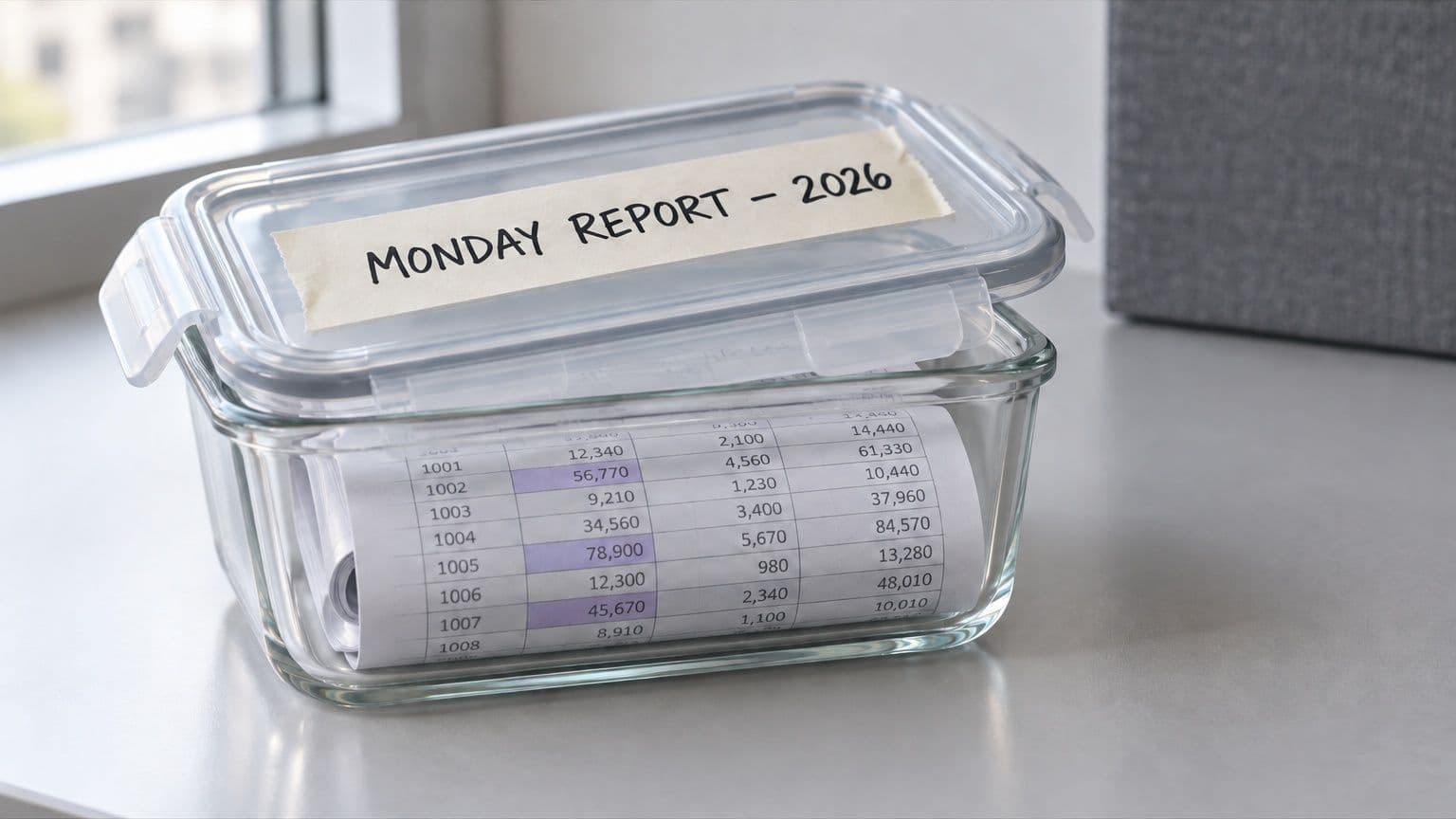
If there’s one thing that has excellent job security, it’s the spreadsheet. Every year around this time, its columns and rows start rattling with excitement. It’s time to get ready for another fiscal year!
While spreadsheets are all about the numbers, it’s what’s behind those numbers that matters: new strategies, new targets, better margins, and for today’s high-growth companies, AI agents that free people up for meaningful work.
Wait: Wasn’t freeing up capacity with agentic work last year’s AI plan, too? Where did all of that extra time go?
Welcome to the corporate leftovers collection.
Last year’s AI strategy. Reheated for 2027. This means your annual plan may have a capacity problem. It assumes capacity that no entity has actually freed up. That’s true for one of two reasons:
1. The AI agents you deployed did not succeed, netting you no extra capacity.
2. The AI agents you deployed did free up capacity, but your operations did not adjust, and you kept all of your old ways of working in place.
For many companies, both scenarios prove true.
That’s not great news for your spreadsheet. It means that any initiative or goal that assumes a new way of working and additional capacity is likely to sputter. And the people you’re counting on to lead new initiatives? They’re often the same people everyone relies on to keep things running the good ol’ way.
When we speak to companies that are struggling to successfully onboard agentic work, this is typically what we see. They keep reheating leftover work and expecting new results. It’s the definition of madness.
Give AI agents a job worth inheriting
An AI agent needs enough context to act. That means it needs to understand how work at your company happens today. If you are overly sunny about how streamlined workflows are and feed the agent an SOP that glosses over how work actually gets done, the agent is doomed.
Instead, start with the outcome and reverse-engineer what getting there requires: the information, the judgment calls, the exceptions, and the moments when someone needs to step in and ensure the job gets done.
That understanding helps you decide which responsibilities an agent can take on and where people should remain involved.
At Within, understanding how work actually happens is the starting point for designing how people and agents work together.
Give one leftover a chance to make a durable plan
All that said, reheating one recurring piece of work is a worthwhile exercise as it will tell you a lot about your current state. Bring together the person who does it, the person who uses the result, and whoever can authorize a change. Then do a Start, Stop, Continue: Decide what can stop, what to start that’s different, and where an agent could help you continue what you’re already doing, but way more efficiently and effectively. Give that decision an owner and time in the plan.
That’s the only way to reach your new targets.Some corporate leftovers are unfinished business. Every well-laid spreadsheet has the potential to go a little sideways during the year, leaving unresolved challenges you planned to tackle and priorities that got pushed back on the table.
Before they land in your 2027 plan again, let’s talk about what would move them forward.
Bring your unfinished business to the table.
On Thursday, November 12, Within is hosting The Unfinished Business Club at Protégé, a dinner for enterprise leaders to discuss the challenges they want to resolve next year. Bring one priority that keeps returning to the plan. We’ll discuss what’s kept it unfinished and where to begin.
- Request a seat →
Loading form…